Capturing the movement of fast moving vehicles.
By its very nature, photography is a static medium. You capture or freeze a moment in time. This is fine if taking a picture of still life or people posing as a group. What can you do if the subject is moving or you are trying to capture a sense of movement?
In this article, we will be looking at photographing fast-moving vehicles. I have a particular interest in World War II aircraft. Some of them will feature later on. All but a few of them had propellers. Seeing them blurred will give a photograph of the aircraft a sense of movement.
Let us start with something a bit easier: motorbikes. A number of years ago, one of my friends, Claire, took me to the race track at Donington. She has a passion for bikes. She rides and owns a few. I took my camera along to see what I could capture.
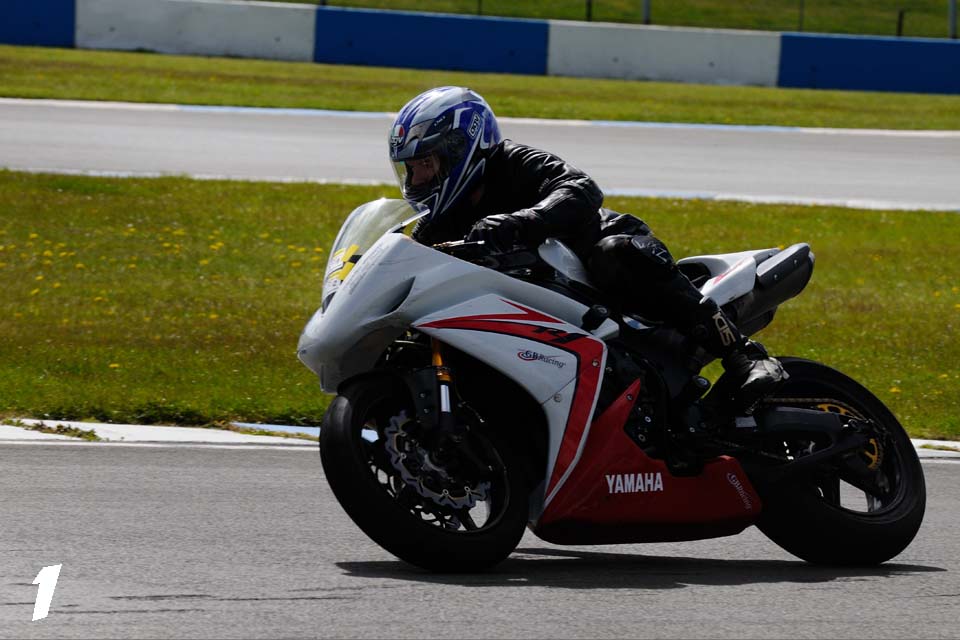
In photograph one, you can see plenty of space has been left in the frame to allow the motorbike to ride into it, so to speak. If you look at the wheels, you can see the spokes. They are very sharp. The blue and white barriers are also clear. The only thing that tells you this bike is in motion is the lean of the rider. To capture the spokes blurring, the shutter speed needs to be decreased. In this case, it was set to 1/1000th of a second.
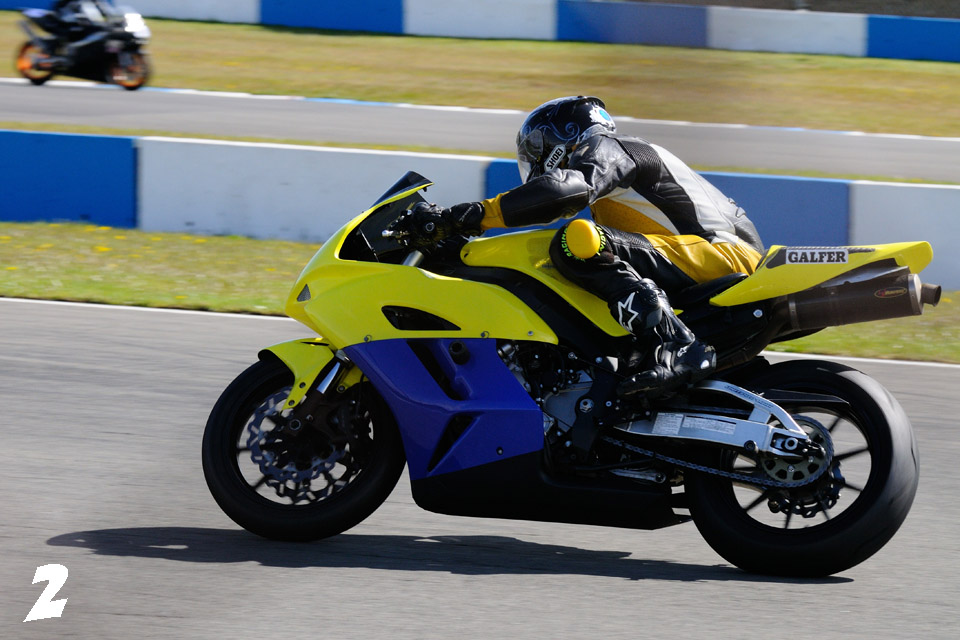
In photograph two, you can see the spokes are blurred. There is still the same lean, but the barriers and another rider (in the top left-hand corner) are blurred. This one has a far greater sense of movement. I dropped the shutter speed down to 1/640th of a second. Not much, but it made a huge amount of difference. If you are wondering how the background barriers were blurred, the camera lens was mounted on a monopod, allowing me to pan the camera as the motorcycle races by. It will take a while to time these shots just right.
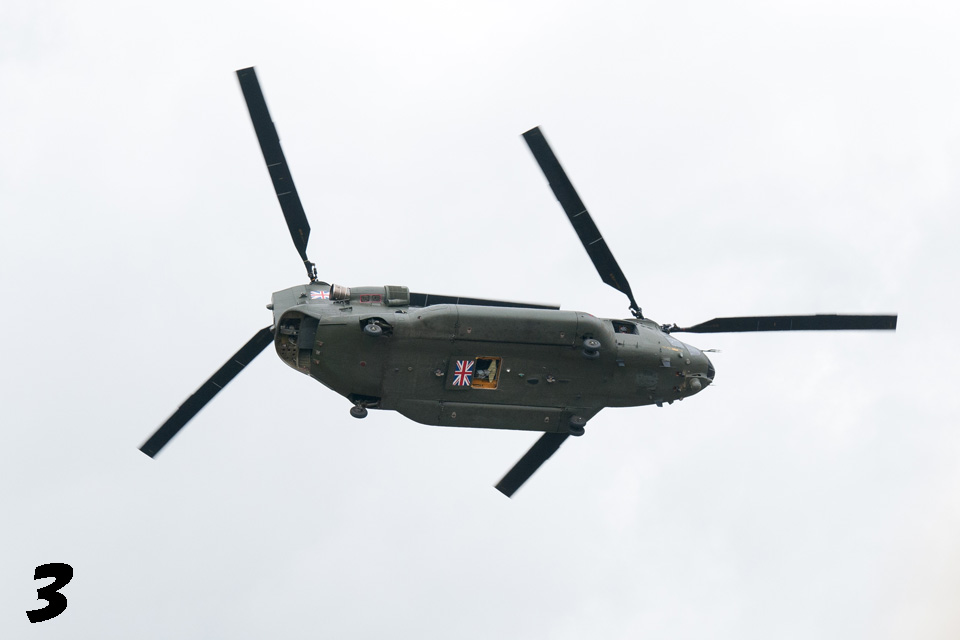
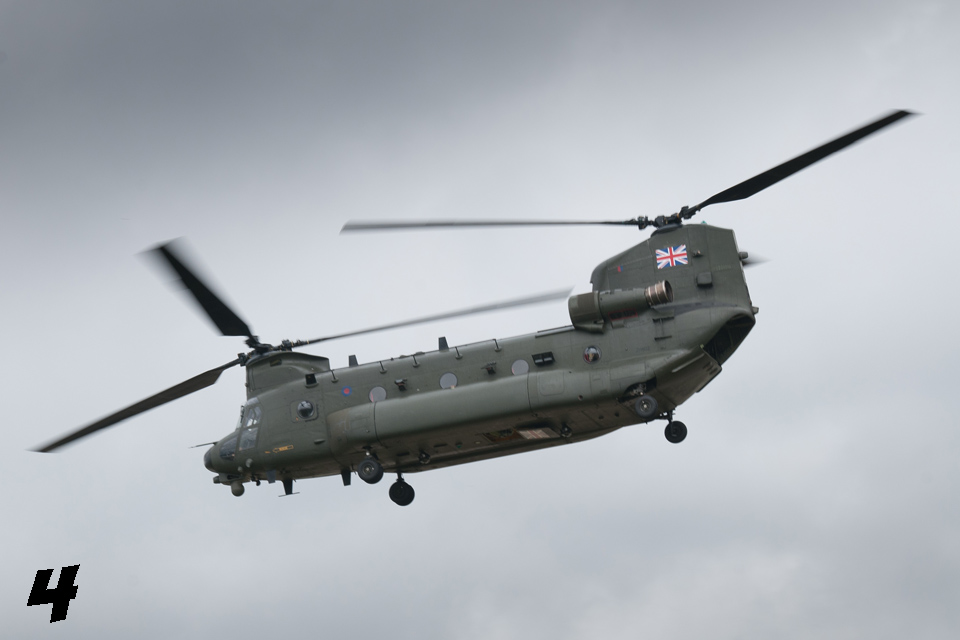
The next couple of photographs are of a Chinook helicopter taken at the Royal International Air Tattoo. In photograph three, the rotary blades look static. There is no blur. I noticed this when I checked the photograph. The shutter speed was dropped from 1/1000th to 1/250th of a second! A bit of a drop to achieve a bit of blur. I had a drop it, check, drop it, etc. Up until now, I had been photographing jets. What you have to watch here is not to drop the shutter speed below the focal length of your lens. I was right on the cusp here. Take a look at photograph four; the results are worth the trouble. Helicopters do not fly past as quickly as the jets; this means you can try this.
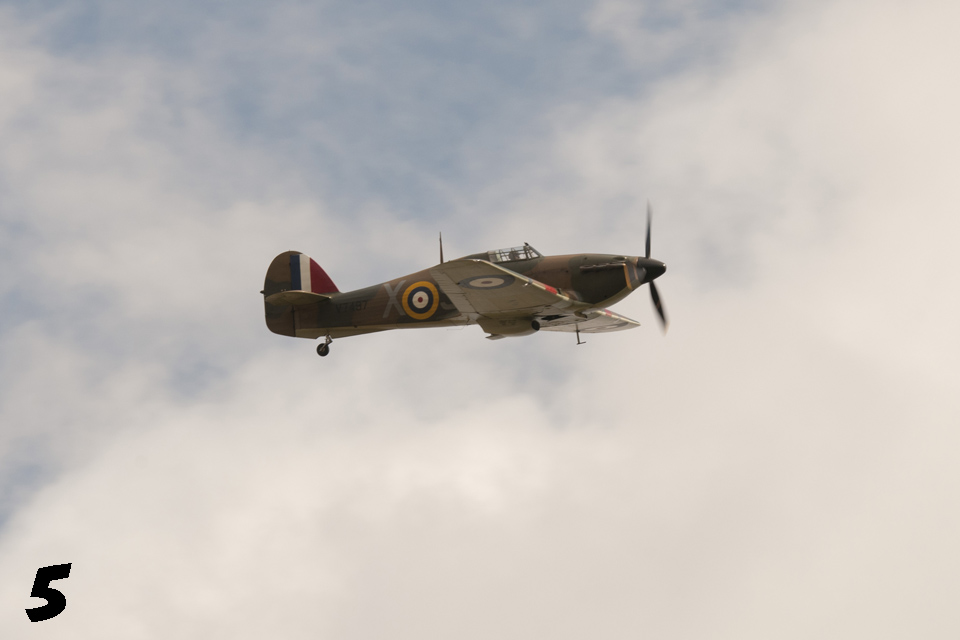
Moving on to Duxford and WWII aircraft. The hero and main workhorse of the Battle of Britain, the Hawker Hurricane, is in photograph five. You can see the propeller blur. They have painted yellow tips. You can see their streaks too. This was taken at 1/400th of a second, f/9 and ISO 200. Once I have my camera set, I tend to leave the shutter speed at one setting and adjust the aperture or ISO if necessary.
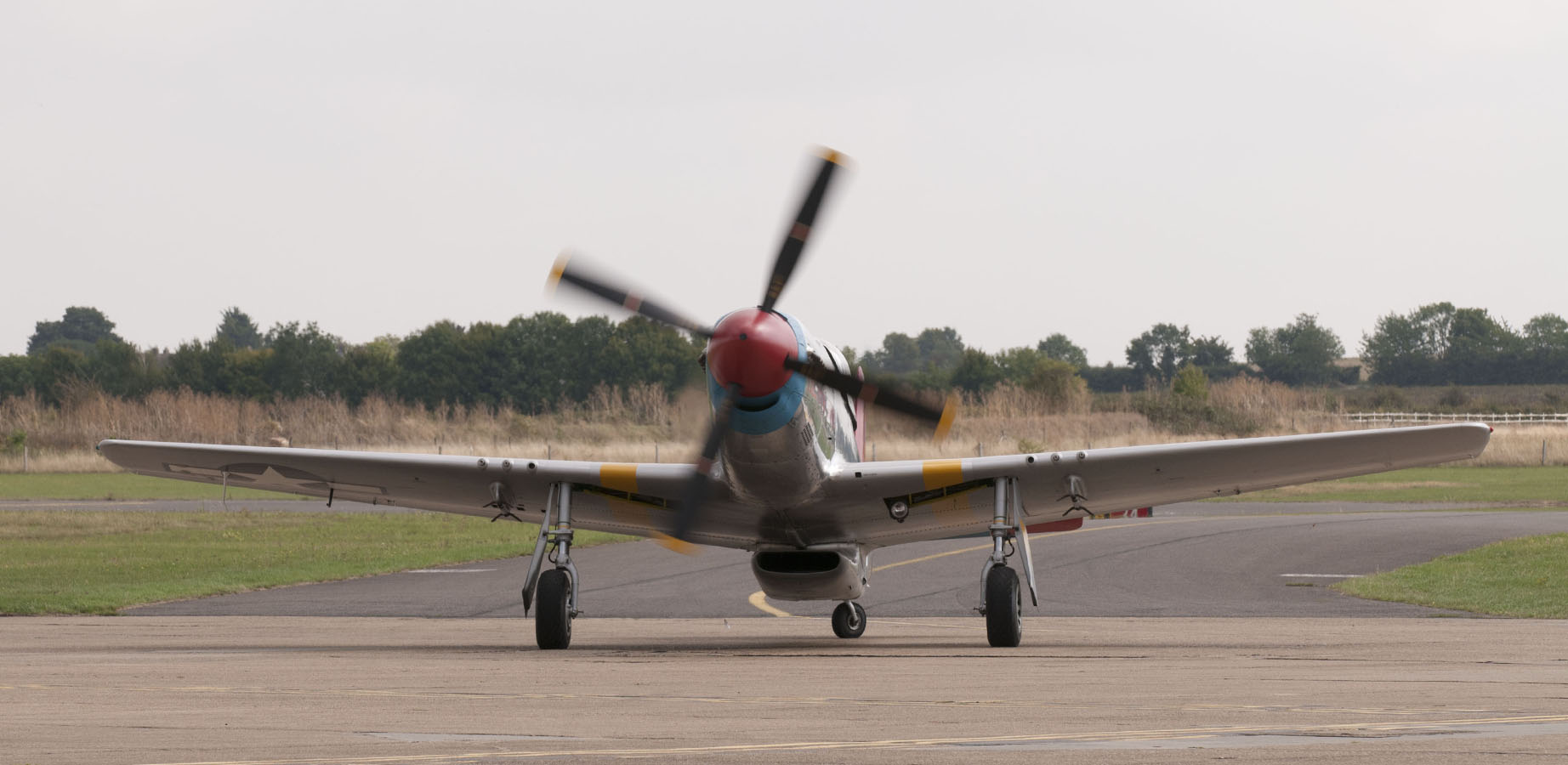
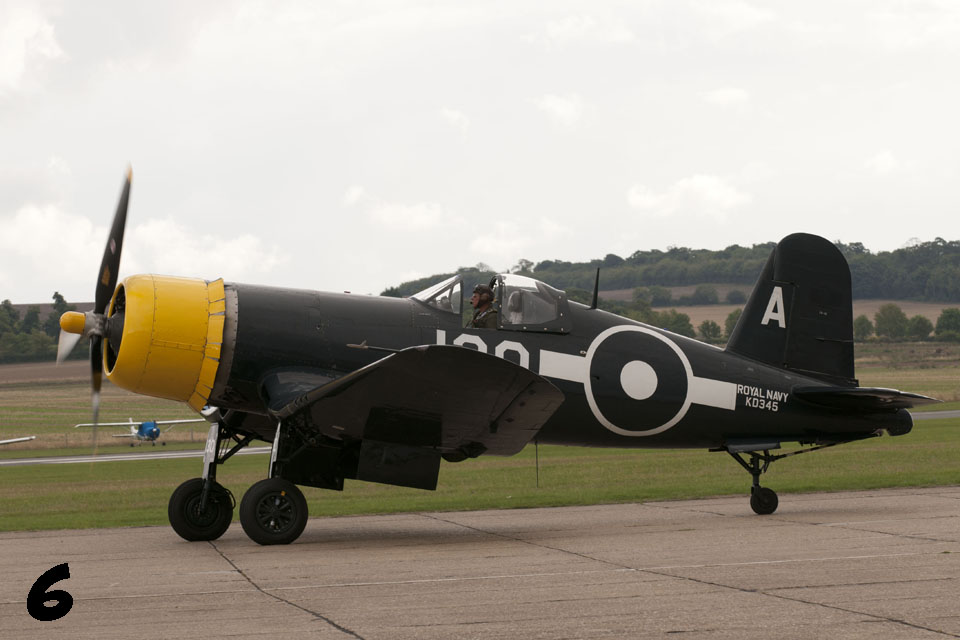
Photograph six is of a Vought Corsair, an American carrier-based plane. It is taxiing towards the take-off point. Once again, the sense of movement comes from the propeller blur. We found a good spot to photograph these historic aircraft.
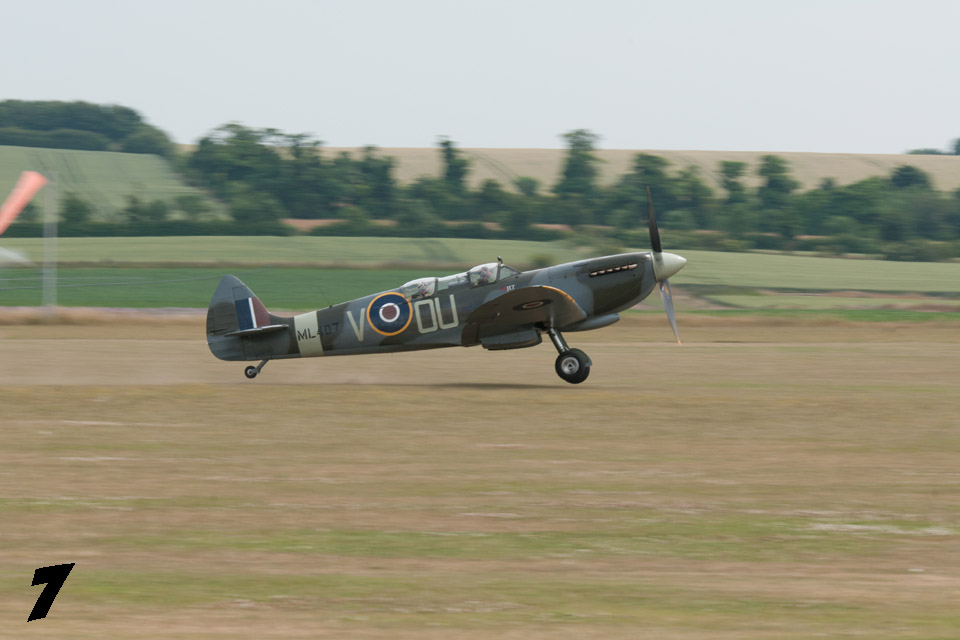
Photograph seven features my friend Drew in the backseat of the legendary Spitfire. Here you can see background, wheel and propeller blur. I am not sure how I pulled this shot off. The settings were f/13, ISO 200 and 1/125th of a second! I was shooting at 300 mm! You can even see a bit of dust trailing from the aircraft. Sometimes, you just need a bit of luck! I was panning at the same time and hand-held. That was a special day. People were standing on the other side of a fence admiring the Spitfire. I was up close with my head inside the rear cockpit!
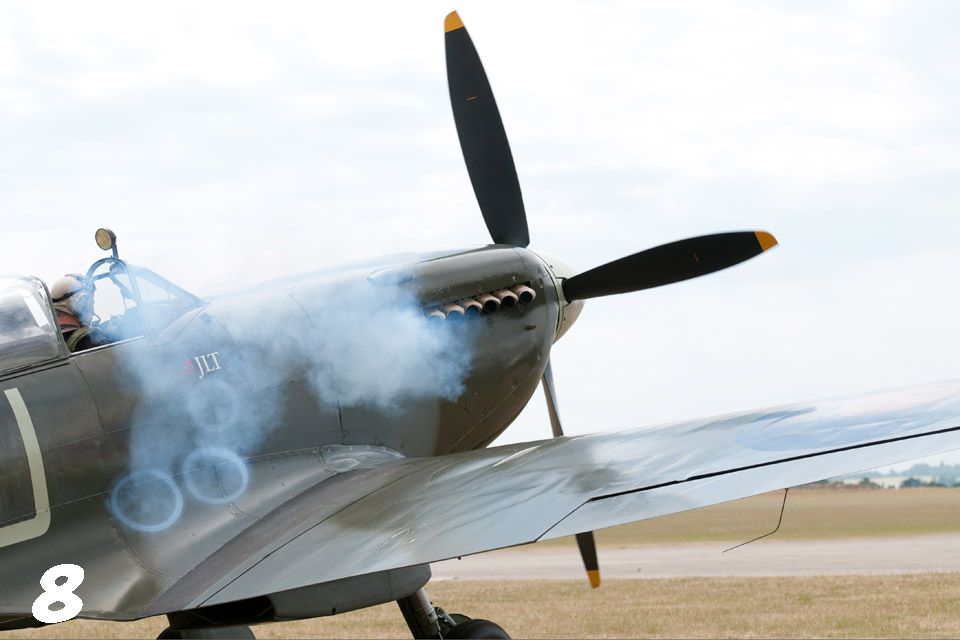
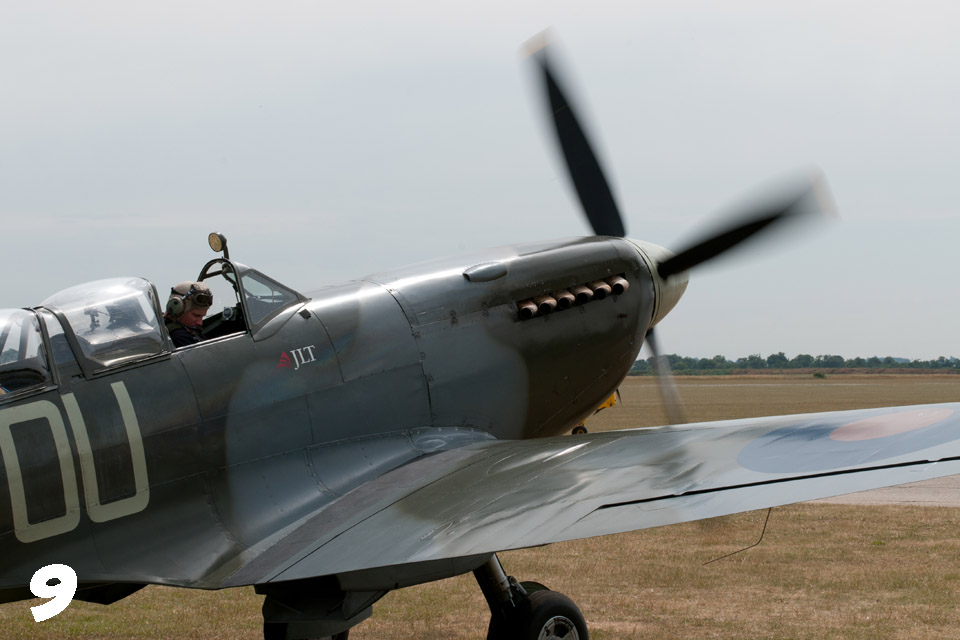
The next two photographs are of the same Spitfire starting its engine. We all know smoke is never static. When it is blown out of a Merlin engine at ignition, that is a moment worth capturing. I love the smoke rings. They are gone in an instant. These photographs are taken within seconds of each other. Number eight captures the rings, and nine the movement of the propeller. The Spitfire had not started moving at the time of the shoot.
I hope you found this article useful and it has given you the know-how to capture movement in your photographs of moving vehicles? Give it go; you have no idea what you can achieve until you try.